مقدمة
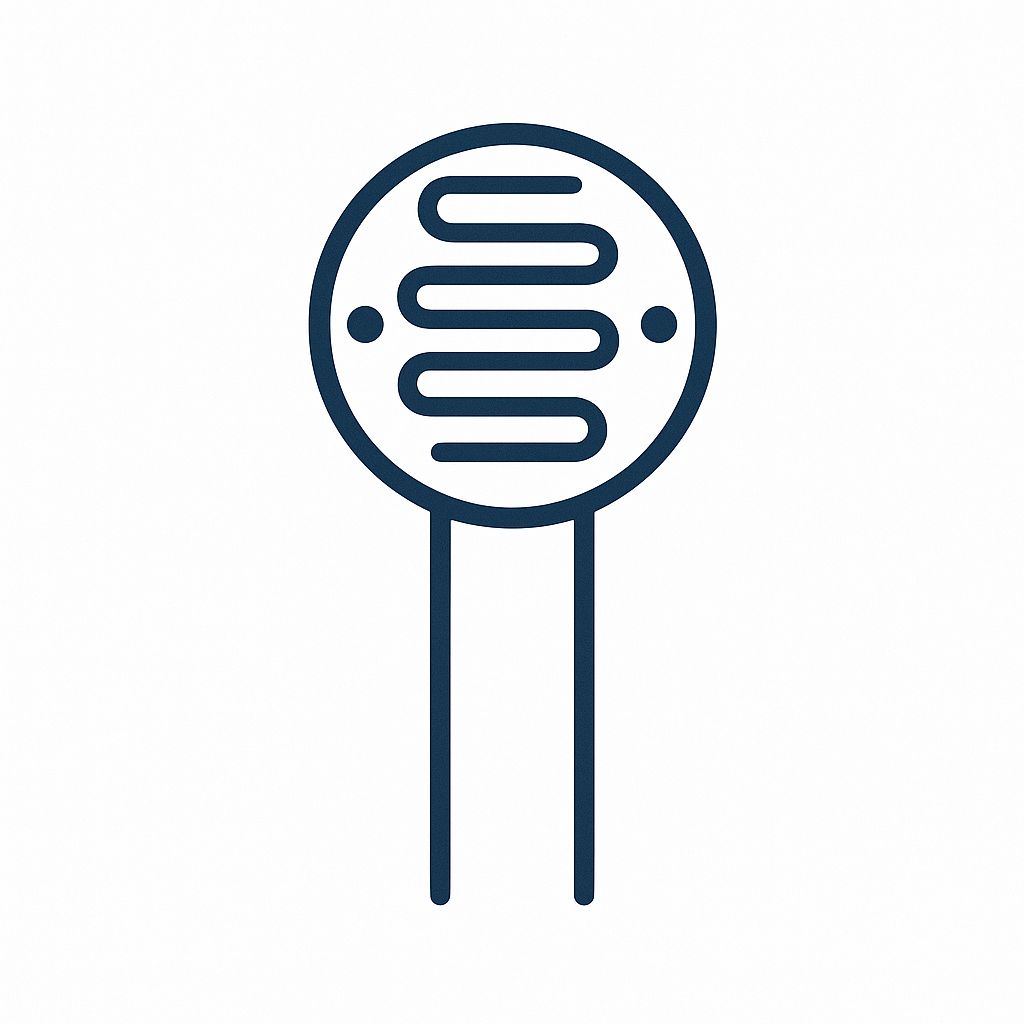
مستشعر المقاومة الضوئية (LDR – Light Dependent Resistor) هو نوع من المستشعرات التي تتغير مقاومتها وفقًا للضوء الساقط عليها. يُستخدم هذا المستشعر في العديد من التطبيقات التي تتطلب استشعار شدة الضوء. يُعتبر LDR من المكونات الأساسية في العديد من الأنظمة الإلكترونية مثل الأنظمة الأوتوماتيكية التي تعتمد على مستوى الإضاءة لتشغيل أو إيقاف الأجهزة.
كيف يعمل مستشعر LDR؟
يعمل مستشعر LDR بناءً على مبدأ أن مقاومته تتغير استجابة للضوء الساقط عليه. في الظلام، تكون مقاومته مرتفعة جدًا (تقريبًا لا تمر التيار)، بينما في الضوء تكون مقاومته منخفضة (ويبدأ التيار في المرور من خلاله). يعتمد ذلك على المادة المستخدمة في تصنيع المستشعر، والتي تكون عادةً مواد شبه موصلة مثل كبريتيد الكادميوم.
كلما زادت شدة الضوء الساقط على المستشعر، انخفضت مقاومته، مما يسمح بمرور التيار الكهربائي. بالعكس، في حالة انخفاض شدة الضوء أو في الظلام، تزداد مقاومته، وبالتالي يقل التيار.
أنواع مستشعرات LDR
- LDR ذو الاستجابة السريعة:
- الوظيفة: هذا النوع من المستشعرات يستخدم في التطبيقات التي تتطلب استجابة سريعة لتغيرات الضوء.
- التطبيقات: كاميرات الأمن التي تحتاج إلى تعديل تلقائي للسطوع حسب الإضاءة المحيطة.
- LDR ذو الاستجابة البطيئة:
- الوظيفة: يُستخدم في التطبيقات التي لا تتطلب استجابة فورية، حيث يستغرق وقتًا أطول في الاستجابة لتغيرات الضوء.
- التطبيقات: أجهزة الإضاءة التي تعمل تلقائيًا عند انخفاض الضوء.
مزايا مستشعرات LDR
- سعر منخفض: يعد مستشعر LDR من المستشعرات منخفضة التكلفة مقارنة بالعديد من المستشعرات الأخرى.
- سهولة الاستخدام: يمكن دمج مستشعر LDR بسهولة في المشاريع الإلكترونية مثل أنظمة الإضاءة الأوتوماتيكية أو أنظمة مراقبة الضوء.
- استجابة سريعة أو بطيئة: يمكن تخصيص اختيار مستشعر LDR وفقًا لاحتياجات التطبيق (سواء استجابة سريعة أو بطيئة).
- مناسب للعديد من التطبيقات: يستخدم في الأنظمة التي تحتاج إلى استشعار مستويات الضوء، مثل أنظمة الإنارة التلقائية أو عدادات الإضاءة.
كيفية توصيل مستشعر LDR بالأردوينو
المكونات المطلوبة:
- لوحة أردوينو (مثل Arduino Uno)
- مستشعر LDR
- مقاومة (عادة 10 كيلو أوم)
- أسلاك توصيل
- لوح تجارب (اختياري)
خطوات التوصيل:
- قم بتوصيل أحد طرفي مستشعر LDR إلى منفذ 5V في لوحة الأردوينو.
- قم بتوصيل الطرف الآخر لمستشعر LDR إلى أحد أطراف المقاومة (10 كيلو أوم).
- وصل الطرف الآخر للمقاومة إلى منفذ GND في الأردوينو.
- قم بتوصيل نقطة التقاطع بين المستشعر والمقاومة إلى أحد منافذ الإدخال التناظري في الأردوينو (مثل A0).
- قم بكتابة الكود المناسب في بيئة البرمجة الخاصة بالأردوينو (Arduino IDE) لقراءة قيم الضوء واتخاذ القرارات بناءً على تلك البيانات.
استخدامات مستشعرات LDR
- الإضاءة الأوتوماتيكية: يستخدم مستشعر LDR في الأنظمة التي تشغل أو تغلق الإضاءة بناءً على مستوى الضوء المحيط.
- كاميرات المراقبة: يمكن استخدامها في الكاميرات التي تعمل بشكل تلقائي في الظلام (مثل كاميرات الرؤية الليلية).
- أنظمة التحكم في الطاقة: يستخدم في أنظمة لتوفير الطاقة عن طريق تشغيل أو إيقاف الأجهزة بناءً على مستوى الإضاءة.
- شاشات العرض الذكية: يستخدم لضبط سطوع الشاشة حسب شدة الضوء المحيط.
التحديات
- التأثيرات البيئية: قد تتأثر قراءات مستشعر LDR بعوامل خارجية مثل درجة الحرارة أو الضوء الصناعي، مما يمكن أن يؤثر على دقة القياس.
- الحاجة إلى معايرة: قد يتطلب مستشعر LDR معايرة دقيقة لضبط استجابته بشكل صحيح للظروف المختلفة.
- دقة محدودة: مستشعرات LDR قد لا تكون دقيقة للغاية في قياس مستويات الضوء مقارنة ببعض المستشعرات الأخرى.
الخاتمة
يعد مستشعر LDR من الأدوات المهمة في المشاريع الإلكترونية التي تحتاج إلى استشعار الضوء. بفضل تكلفته المنخفضة وسهولة استخدامه، يعد خيارًا مثاليًا للعديد من التطبيقات مثل الإضاءة الأوتوماتيكية، أنظمة الأمن، وأجهزة العرض الذكية. على الرغم من بعض التحديات التي قد يواجهها المستخدم، إلا أنه يبقى أحد أكثر المستشعرات فاعلية في العديد من التطبيقات العملية.
LDR (Light Dependent Resistor) Sensor
Introduction
The Light Dependent Resistor (LDR) is a type of sensor whose resistance changes in response to light intensity. This sensor is widely used in many applications where light sensing is required. The LDR is an essential component in various electronic systems, such as automatic systems that rely on light levels to turn devices on or off.
How Does an LDR Sensor Work?
An LDR works on the principle that its resistance changes depending on the amount of light falling on it. In the dark, its resistance is very high (almost no current can pass through it), while in light, its resistance is low (allowing current to flow through it). The material used in LDRs is usually a semiconductor, such as cadmium sulfide.
As the light intensity increases, the resistance of the LDR decreases, allowing more current to flow through. Conversely, in darkness, the resistance increases, and the current passing through decreases.
Types of LDR Sensors
- Fast Response LDR:
- Function: This type of sensor is used in applications that require quick responses to changes in light.
- Applications: Security cameras that need automatic adjustments in brightness depending on the ambient light.
- Slow Response LDR:
- Function: Used in applications where immediate response is not required, as it takes longer to react to changes in light.
- Applications: Automatic lighting systems that turn on when light levels drop.
Advantages of LDR Sensors
- Low Cost: The LDR is a low-cost sensor compared to many other types of sensors.
- Ease of Use: LDR sensors are easy to integrate into electronic projects like automatic lighting systems or light monitoring systems.
- Fast or Slow Response: The selection of LDR sensors can be customized based on the application’s needs (either fast or slow response).
- Versatile Applications: Used in systems that need light level detection, such as automated lighting or light meters.
How to Connect an LDR Sensor to Arduino
Required Components:
- Arduino board (e.g., Arduino Uno)
- LDR Sensor
- Resistor (usually 10 kΩ)
- Connecting wires
- Breadboard (optional)
Connection Steps:
- Connect one terminal of the LDR sensor to the 5V pin on the Arduino.
- Connect the other terminal of the LDR to one side of the resistor (10 kΩ).
- Connect the other side of the resistor to the GND pin on the Arduino.
- Connect the junction between the LDR and the resistor to one of the analog input pins on the Arduino (e.g., A0).
- Write the appropriate code in the Arduino IDE to read the light levels and take action based on the data.
Applications of LDR Sensors
- Automatic Lighting: LDR sensors are used in systems that automatically turn on or off lights based on the surrounding light levels.
- Security Cameras: Used in cameras that automatically switch to night vision mode when light levels drop.
- Energy Control Systems: Used in systems to control power consumption by turning devices on or off based on light levels.
- Smart Displays: Used in adjusting screen brightness according to ambient light conditions.
Challenges
- Environmental Effects: LDR sensor readings can be affected by external factors such as temperature or artificial light, which may impact accuracy.
- Calibration Requirement: LDR sensors may require fine-tuning for accurate responses under different lighting conditions.
- Limited Accuracy: Compared to other light sensors, LDRs may not be as precise in measuring light intensity.
Conclusion
The LDR sensor is an essential tool for projects that need light sensing capabilities. With its low cost and ease of use, it is an ideal choice for many applications such as automatic lighting, security systems, and smart displays. Despite some challenges, it remains one of the most effective and widely used sensors for light-related tasks in electronic systems.